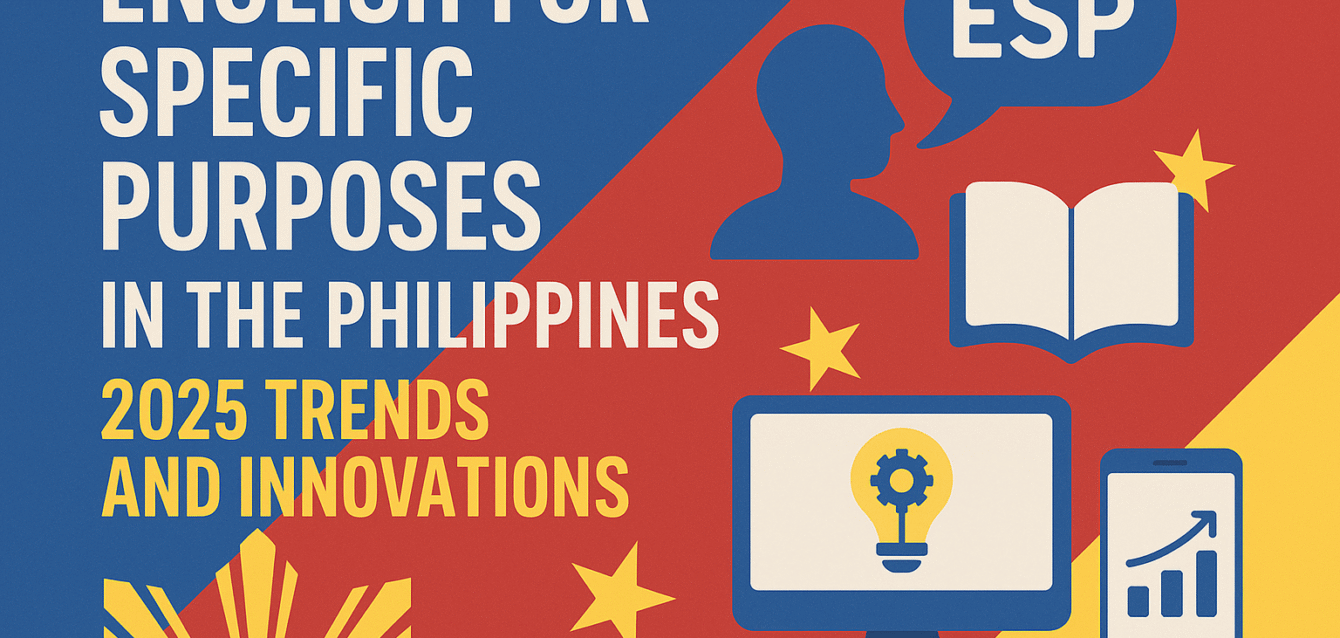
In 2025, the Philippines continues to solidify its position as a global leader in English language education, particularly in the realm of English for Specific Purposes (ESP). With its unique blend of cultural affinity for English, a robust educational infrastructure, and a strategic focus on industry-specific language training, the country is at the forefront of ESP innovations.
Understanding English for Specific Purposes
English for Specific Purposes is a learner-centred approach that tailors English language instruction to the specific needs of individuals in particular professions or academic disciplines. Unlike General English courses, ESP programmes focus on relevant vocabulary, communication tasks, and discourse patterns pertinent to specific fields such as healthcare, engineering, law, and business.
Emerging Trends in ESP in the Philippines
1. Integration of Artificial Intelligence
Artificial Intelligence (AI) is revolutionising ESP by providing personalised learning experiences. AI-powered tools can analyse learners’ performance, adapt content to individual needs, and offer real-time feedback, enhancing the efficiency and effectiveness of language acquisition.
2. Emphasis on 21st Century Skills
ESP programmes are increasingly incorporating 21st-century skills such as critical thinking, collaboration, and digital literacy. These skills are essential for professionals navigating the complexities of modern workplaces and are being integrated into ESP curricula to prepare learners for real-world challenges.
3. Hybrid Learning Models
The adoption of hybrid learning models, combining online and face-to-face instruction, is gaining traction in ESP. This approach offers flexibility, allowing learners to access resources and engage in interactive activities that enhance their language skills in context-specific scenarios.
4. Industry-Specific Curriculum Development
ESP courses are increasingly tailored to meet the specific requirements of various industries. For instance, English for Medical Purposes focuses on medical terminology and patient communication, while English for Engineering emphasises technical vocabulary and documentation skills. This specialisation ensures that learners acquire language competencies directly applicable to their professional roles.
5. Enhanced Assessment Strategies
Assessment in ESP is evolving to include context-specific evaluations that measure learners’ ability to use English effectively in their respective fields. These assessments focus on practical application, such as writing reports, delivering presentations, and engaging in professional dialogues, providing a more accurate reflection of learners’ competencies.
The Role of Ownfluent in ESP Learning
Ownfluent is at the forefront of ESP education, offering customised learning solutions that align with the latest trends and industry requirements. By leveraging AI technology, Ownfluent provides personalised learning paths, real-time feedback, and interactive content tailored to specific professional contexts. Whether you’re a healthcare professional, engineer, or business executive, Ownfluent’s ESP programmes are designed to enhance your English proficiency and empower you to excel in your field.