Unlock the charm of UK English by mastering these 15 quintessential idioms – complete with origins, usage tips, synonyms, and example sentences.
Why Learn British Idioms?
British English is packed with playful expressions and cultural references that may leave learners puzzled. By incorporating these idioms into your speech and writing, you’ll:
- Speak Naturally: Blend in at the pub, office, or dinner party.
- Understand Nuance: Grasp the dry wit and understatement that Brits love.
- Boost Fluency: Convey ideas idiomatically, not just literally.
1. Bob’s your uncle
Meaning & Origins: A cheerful way to say and there it is or job done. Allegedly from 19th-century politics when Prime Minister Lord Salisbury appointed his nephew (‘Bob’) to a key post.
Usage Tips: Use after explaining a simple process.
Synonyms: There you go, and that’s that.
Examples:
- Just add flour, sugar, eggs… bob’s your uncle – you’ve made a cake!
- Turn the key, press start, bob’s your uncle.
2. Chuffed to bits
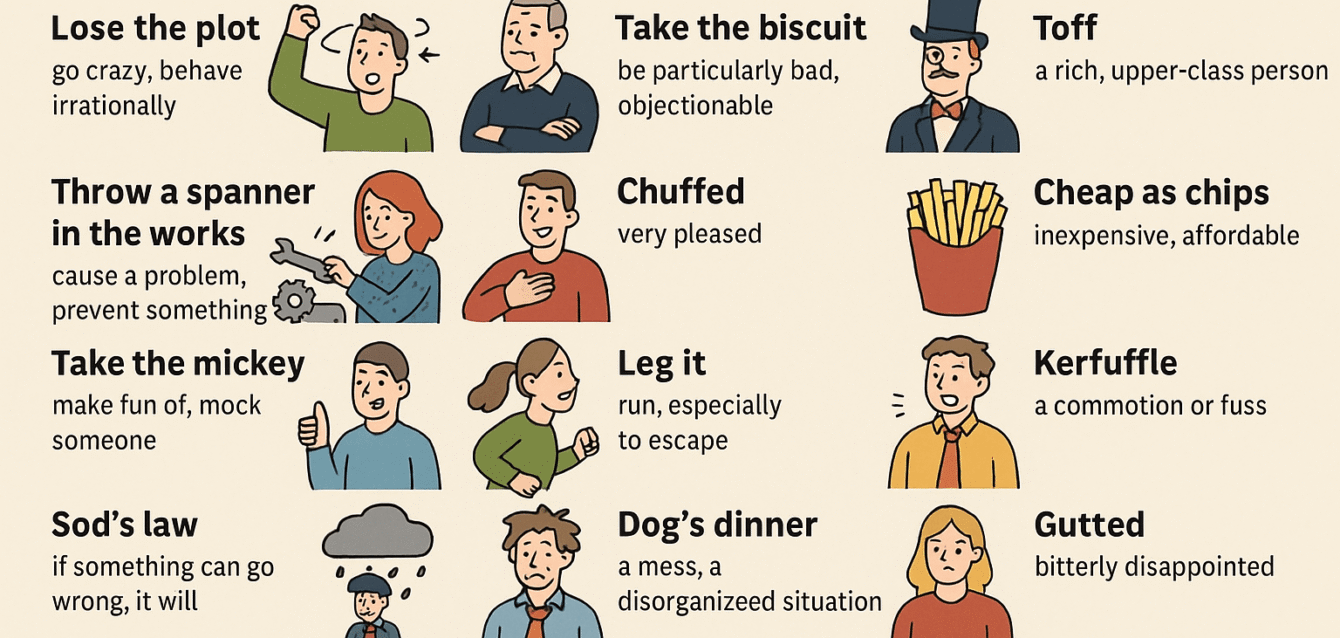
Meaning & Origins: Extremely pleased or proud. Brits often use chuffed alone; to bits intensifies it.
Usage Tips: Informal – great for celebrating good news.
Synonyms: Thrilled, over the moon.
Examples:
- I got the promotion – chuffed to bits!
- She was chuffed to bits with her exam results.
3. Gobsmacked
Meaning & Origins: Utterly astonished. Gob is slang for mouth; to be smacked in the gob is to be speechless.
Usage Tips: Use to express genuine surprise.
Synonyms: Amazed, flabbergasted.
Examples:
- I was gobsmacked when they called me into the boss’s office.
- He looked gobsmacked at the sight of his birthday surprise.
4. Throw a spanner in the works
Meaning & Origins: To cause an unexpected problem. A spanner is the UK term for a wrench – dropping one into machinery will halt production.
Usage Tips: Use when setbacks derail plans.
Synonyms: Throw a wrench in the gears, throw a curveball.
Examples:
- The sudden rainstorm threw a spanner in the works for our garden party.
- His resignation threw a spanner in the works of our reorganisation.
5. Take the biscuit
Meaning & Origins: To be the most extreme example of something (often annoying or frustrating). Possibly from 19th-century cookery shows where a perfect biscuit was prized.
Usage Tips: Usually negative or exasperated.
Synonyms: That tops it, that beats everything.
Examples:
- First he’s late, then he forgets the files – that really takes the biscuit!
- Her cheekiness today really took the biscuit.
6. Raining cats and dogs
Meaning & Origins: Pouring rain. The exact origin is unclear – maybe from heavy thatch roofs (animals sheltering) or a 17th-century satire.
Usage Tips: Humorous; best in casual conversation.
Synonyms: Pouring down, bucketing down.
Examples:
- Don’t forget your brolly – it’s raining cats and dogs out there.
- We got soaked; it was raining cats and dogs.
7. Not my cup of tea
Meaning & Origins: Something you don’t like or isn’t your preference. Rooted in Britain’s tea-drinking culture.
Usage Tips: Polite way to express disinterest.
Synonyms: Not for me, not my thing.
Examples:
- Golf’s not really my cup of tea.
- Fine dining? Honestly, that’s not my cup of tea.
8. Full of beans
Meaning & Origins: Energetic, lively. Possibly from animals fed on beans becoming spirited.
Usage Tips: Compliment on high energy – often with children.
Synonyms: Bubbling over, revved up.
Examples:
- The kids were full of beans after that sugar rush.
- She’s always full of beans at the gym.
9. Bits and bobs
Meaning & Origins: A collection of small items or tasks. Bobs is a 16th-century term for small pieces.
Usage Tips: Great when referring to miscellaneous things.
Synonyms: Odds and ends, this and that.
Examples:
- I’ve got bits and bobs to pick up from the shops.
- Spent the weekend doing bits and bobs around the house.
10. To leg it
Meaning & Origins: To run away, often quickly. Leg as verb shows using your legs to escape.
Usage Tips: Informal – fits stories of dashes or escapes.
Synonyms: Dash off, make a run for it.
Examples:
- When the alarm went off, we legged it out of the building.
- I saw the bus coming and legged it to catch it.
11. Can’t be arsed
Meaning & Origins: Too lazy or unwilling to bother. Arsed comes from arse (butt) – i.e., can’t be bothered to get off it.
Usage Tips: Very informal – avoid in polite company.
Synonyms: Can’t be bothered, too lazy.
Examples:
- Can’t be arsed to cook tonight – let’s get a takeaway.
- He can’t be arsed doing his homework.
12. Spend a penny
Meaning & Origins: Euphemism for using a public toilet. Originates from coin-operated lavatories charging one old penny in the late 19th century.
Usage Tips: Polite, slightly cheeky way to excuse yourself.
Synonyms: Visit the loo, use the facilities.
Examples:
- Excuse me, I need to spend a penny.
- We’ll stop at the service station so you can spend a penny.
13. Faff about
Meaning & Origins: To waste time or dither over something unimportant. Likely from onomatopoeic fa-fa sounds of fussing.
Usage Tips: Critical of procrastination or needless fuss.
Synonyms: Mess around, dawdle.
Examples:
- Stop faffing about and start packing!
- He faffed for ages before picking a movie.
14. Skint
Meaning & Origins: Broke, having no money. Possibly from 19th-century dialect skin meaning to strip someone of money.
Usage Tips: Informal – common in casual chat about finances.
Synonyms: Broke, penniless.
Examples:
- I’m skint until payday.
- Can’t join you for lunch – I’m a bit skint this week.
15. Have a kip
Meaning & Origins: To take a nap or short sleep. Kip is an old Northern English word for sleep.
Usage Tips: Perfect for describing a brief rest.
Synonyms: Take a nap, grab forty winks.
Examples:
- I’m knackered – going to have a quick kip.
- After that walk, let’s have a kip before dinner.
Practice Activities to Internalize UK Idioms
- Idiom Journal: Each day, write two original sentences using different British idioms.
- Media Immersion: Watch UK shows or films (e.g., The Crown, Gavin & Stacey) and note every idiom you hear.
- Conversation Role-Play: Partner up and act out scenarios – leg it to catch a bus, bob’s your uncle cooking demo, or chuffed to bits about good news.
- Flashcard Drills: Use OwnFluent’s Word Pro feature to review definitions and record your voice applying each idiom.
Take Your British English to the Next Level
Mastering UK idioms is about more than vocabulary – it’s embracing the humour and heart of British culture. With OwnFluent’s region-specific modules, AI-driven pronunciation feedback, and adaptive quizzes, you’ll speak – and think – like a true Brit in no time.
👉 Start your free OwnFluent trial today and immerse yourself in authentic British English!